
Hello, Word Lovers!
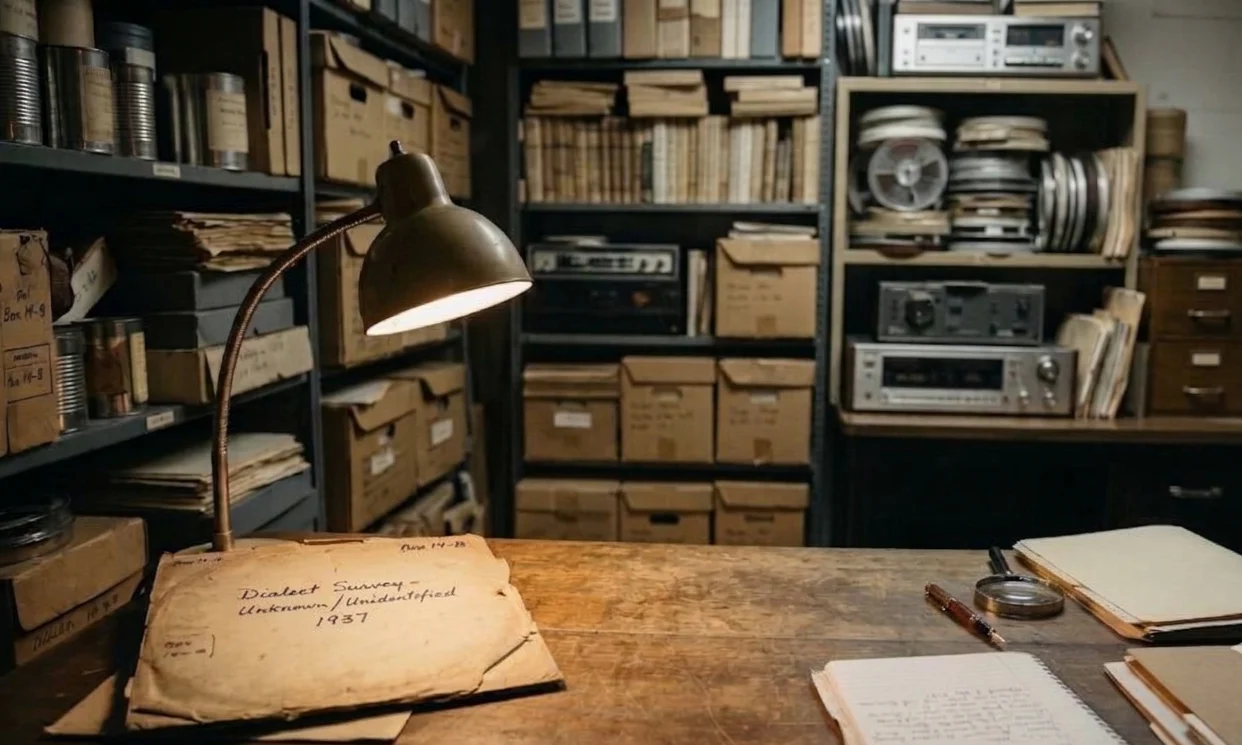
Imagine finding a set of old recordings that had been forgotten for more than 90 years. That's exactly what happened when a Cambridge linguist traced some mysterious aluminium discs, labelled simply "Louisiana", to an archive in Indiana.
What he discovered was something special: the everyday voices of people speaking Louisiana Creole, a language that few people speak today.
Born in the 18th century from a blend of French and West African languages, Louisiana Creole was once widely spoken in New Orleans and the surrounding plantation communities. Today, only a few thousand native speakers remain.
🌀 Weekly Word Wonder: INVETERATE
Pronunciation: in-VET-uh-rit
Part of speech: Adjective
Definition: Deeply rooted and long-established; habitually practised, sometimes with the sense of something stubborn and hard to shake off.
Origin: Late Middle English, via Old French inveteré, from Latin inveteratus, the past participle of inveterare "to make old, to age," from inveterus "old." The sense "habitual, practised from long ago" is late Middle English; the modern sense "deeply rooted, long-established" dates from the 17th century.
Usage:
1. She is an inveterate reader who always carries a book wherever she goes.
2. Even after retiring, she remained an inveterate gardener, spending hours tending to her plants.
📜 What's Special?
The recordings were made by Lorenzo Dow Turner, a Black linguist from North Carolina who had already studied Gullah speakers in Georgia and South Carolina. In 1935 he travelled to Louisiana and recorded Creole speakers for a research project whose funding was rejected; he apparently never published the work. The aluminium discs, labelled only "Louisiana," were later digitised by Indiana University's Archives of Traditional Music. Dr Oliver Mayeux, a Cambridge linguist, spotted a line about a Louisiana field trip in Turner's biography, found the discs, and used Turner's surviving address book to trace contacts for the trip.
More about the recordings...
The recordings preserve speakers born in the 19th century: Emma Benoit, a sharecropper and mother of twelve; George Doyle, a Black police officer before the New Orleans force was segregated; and Odélia Edmond, who recalls swindling a seller of protective brick dust out of thirty cents. Creole's grammar surfaced at last: articles attach directly to nouns, and a determiner such as "the" follows. Mayeux says contemporary French speakers would simply not be able to understand it.
🧩 Community Puzzle
Jumbled Letters: Unscramble these words.
HCAEVIR (A collection of historical or important records kept for future study.) →
TOEGNU (The muscular organ used for speech and taste.) →
ACECNT (The distinctive way a region or a group pronounces its words.) →
TIIULGNS (A person who studies how language works.) →
OEICV (The sound produced when a person speaks or sings.) →
Last Week's Answers (Edition #50)
Jumbled Letters
LUVMEL — VELLUM
CHEPIR — CIPHER
TURGET — GUTTER
OFILO — FOLIO
DINBIGN — BINDING
Until next week, keep playing.
— The Lexulous Team