
Hello, Word Lovers!
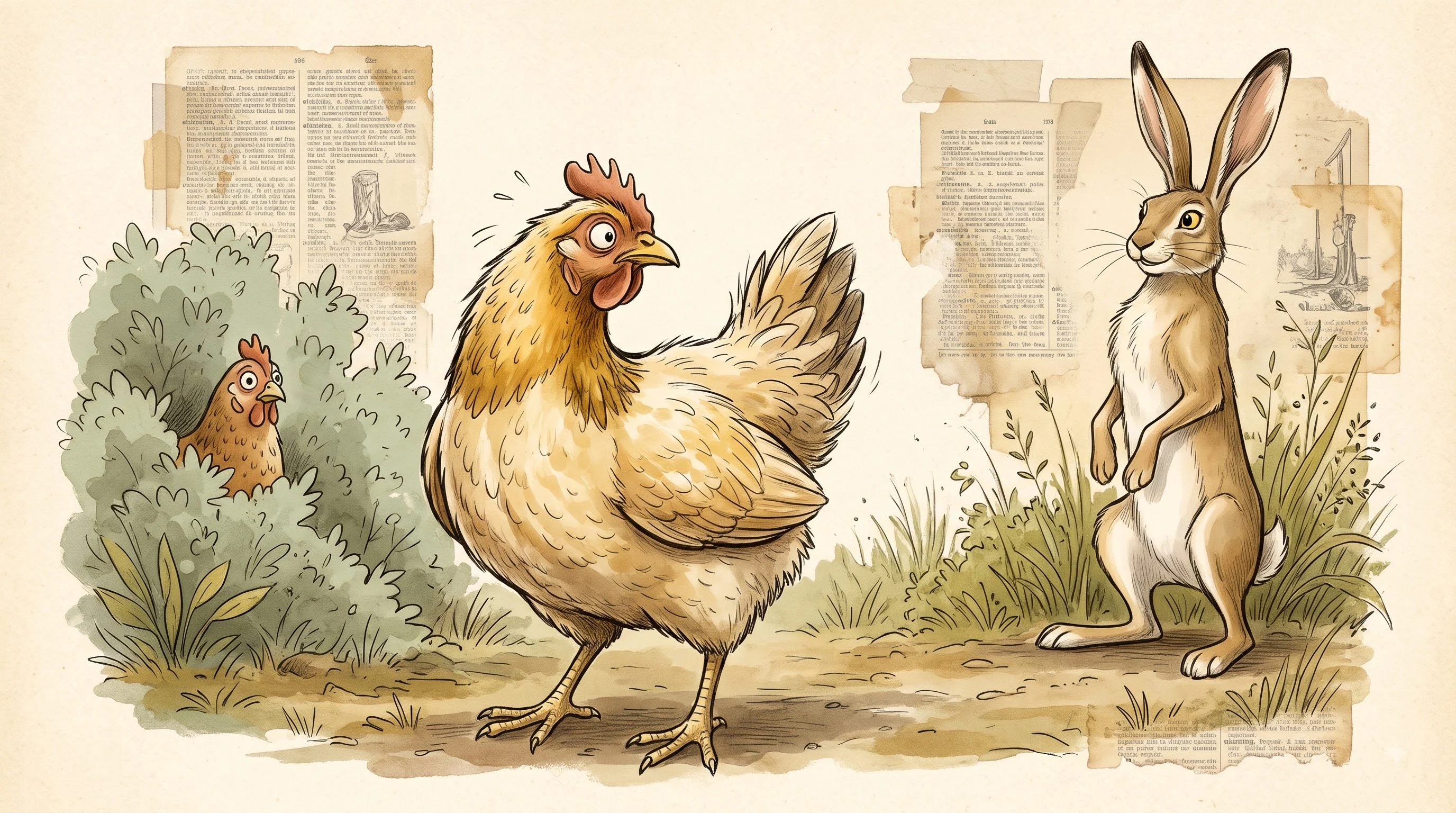
Why is a frightened person called a chicken in English? Interestingly, in German, a coward is a hare, while in French, it's a wet hen. Now, PETA wants the Oxford English Dictionary to drop the meaning of chicken as a coward, arguing that it's unfair to the bird. But the story behind this familiar insult goes back much further. Where did it actually come from?
🌀 Weekly Word Wonder: CRAVEN
Pronunciation: KRAY-vuhn
Part of speech: Adjective
Definition: Cowardly; contemptibly timid; lacking courage. As a noun, an acknowledged coward.
Origin: The word is Middle English, and it began life as a description of a loser. It appears in the 1200s as cravant, "defeated, vanquished," probably borrowed from Old French cravanté, the past participle of cravanter "to strike down," and influenced by the Middle English creaunt that gave us recreant. The Oxford English Dictionary calls the origin obscure, but the sense is plain: craven first meant beaten. By about 1400 it had turned to "cowardly," perhaps by way of the intermediate idea of confessing oneself defeated.
Usage:
1. His craven behaviour disappointed everyone who had trusted him.
2. The leader was criticised for his craven refusal to stand up for what was right.
📜 What's Special?
The Oxford English Dictionary's entry for the informal use reads "a faint-hearted person; a coward." The dictionary traces the earliest recorded use of chicken itself for a coward to Shakespeare, In Cymbeline, cited by the dictionary under 1616, fleeing soldiers cry "Forthwith they fly, Chickens." The hen was doing the work earlier: a play from about 1450 called a coward a "henne-harte," or hen-hearted. One account of the insult points to the contrast between the hen and the rooster. In the 16th century a formidable man might be praised as a cock, and the hen, set beside him, became the timid half of the pair. The whole bird took the blame.
More about the fowl...
Other languages chose their own animals. German has Angsthase, literally a fear-hare, for a coward. French keeps the hen but soaks it: a poule mouillée is a wet hen. Catalan simply calls a coward gallina, a hen. Polish uses its word for the polecat, tchórz, to mean a coward. The animal changes with the language; the insult does not.
🧩 Community Puzzle
Jumbled Letters: Unscramble these words.
KCOLF (A group of birds, or of sheep, that stays together.) →
ORSOT (The perch where a bird settles down for the night.) →
UPKLC (Spirited courage; also, to strip a bird before cooking.) →
KLUCC (The low, throaty sound a chicken makes.) →
HRFEAET (One of the light structures covering a bird's body.) →
Last Week's Answers (Edition #51)
Jumbled Letters
HCAEVIR — ARCHIVE
TOEGNU — TONGUE
ACECNT — ACCENT
TIIULGNS — LINGUIST
OEICV — VOICE
Until next week, keep playing.
— The Lexulous Team